Tagus or Sado in winter: where to start birdwatching
In the Sado, low tide exposes feeding areas; in EVOA's lagoons, high tide can bring birds closer to the hides. Compare access, habitats and the level of guidance.
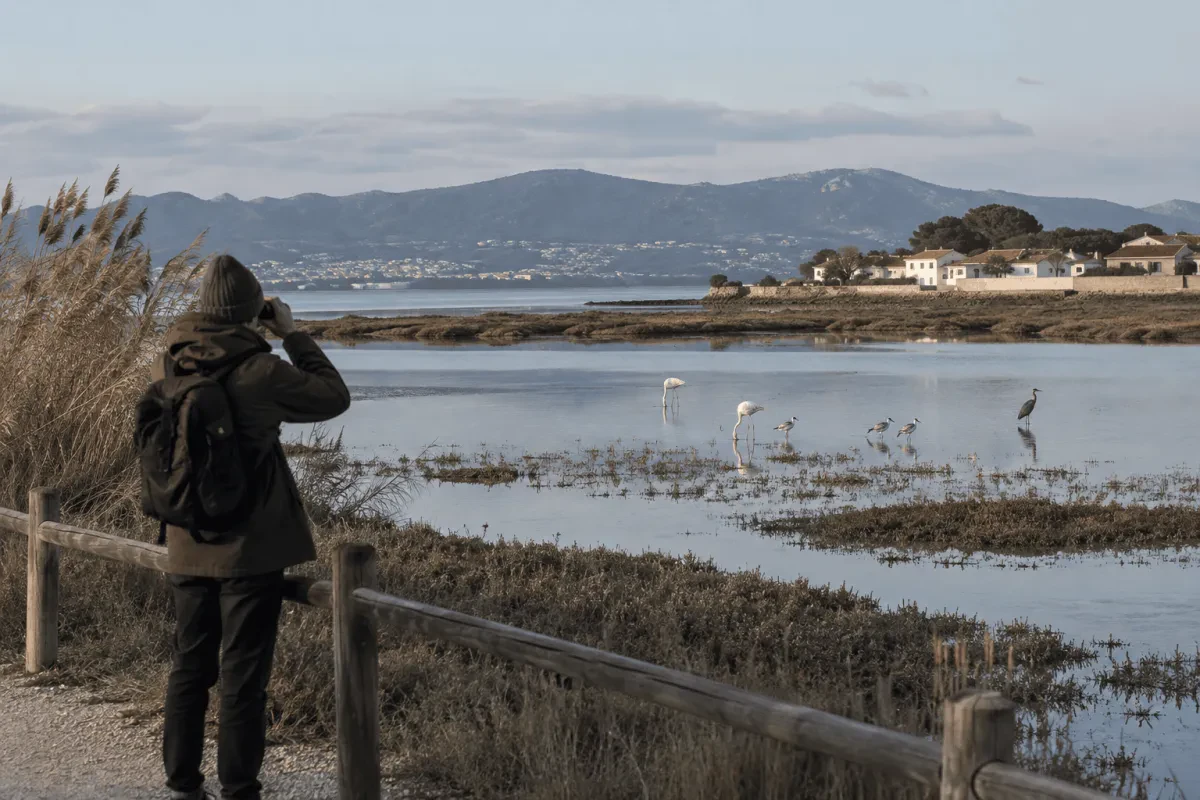
A beginner gains little from asking «which one has more birds?». The useful question is different: how much time do you have, how will you get around, and do you prefer to explore independently or start at a facility prepared to guide your birdwatching.
Starting from Setúbal, Herdade da Mourisca is the most direct gateway to the Sado. EVOA, in the Lezíria de Vila Franca de Xira, requires more travel and planning, but brings lagoons, hides, trails and interpretation together in one place. To explore only the local option in more detail, there is a separate guide to birdwatching in the Sado Estuary in Setúbal.
The comparison that matters when you are starting out
| Criterion | Sado, via Mourisca | Tagus, via EVOA |
|---|---|---|
| Starting point | Mourisca Tidal Mill, within the municipality of Setúbal | EVOA, accessed through Portão do Cardal, next to Marechal Carmona Bridge |
| Sensible amount of time | One morning or afternoon | Most of a day |
| Experience | Interpretation centre, trails and birdwatching in an open estuarine landscape | More than five kilometres of trails, four hides and the possibility of a guided visit |
| Habitats | Salt marsh, salt pans, mudflats, reed beds, rice fields, pastureland and woodland areas | Lagoons with varying depths and vegetation; some visit options include the lezíria and rice fields |
| Most interesting tide | The ebb tide and low tide expose feeding areas for waders | High tide can concentrate birds seeking refuge in the lagoons |
| Without a car | The journey should be planned in advance; a car gives you more freedom to time your visit with the tide | EVOA indicates that a transfer from Vila Franca de Xira railway station may be possible, subject to contact and availability |
| Best choice for | Those staying in Setúbal who want a compact introduction | Those who value hides, interpretation and a more structured route |
Sado: learning to read the tide
In winter, the Sado's mudflats are used by numerous waders to feed during low tide. This does not mean that every visit will offer the same species or the same numbers. It means that the tide timetable matters more than a checklist.
Mourisca Tidal Mill serves as a clear reference point in a landscape that brings together salt marsh, salt pans and former rice fields. For a first outing, this concentration of habitats is more useful than trying to cover the entire estuary. It allows you to observe feeding behaviours and compare birds on the water, mudflats and banks without turning the day into a succession of journeys.
Plan for your first visit to the Sado
- Check the Portuguese Hydrographic Institute's Tide Table for the year of your visit and look for a window that includes the ebb tide or low tide.
- Contact Mourisca Tidal Mill directly to confirm opening hours, available services and the trails accessible on that date.
- Start by birdwatching from the area around the mill. Spend a few minutes distinguishing sizes, bills, legs and feeding habits before looking for names in a field guide.
- Follow only the indicated trails. Salt pans, fields and side paths should not automatically be treated as public access routes.
A pair of binoculars is enough to get started. A telescope helps when birds are far away, but it should not be a requirement for a first experience. Waterproof clothing, protection from the wind and footwear suitable for wet ground are more important choices than heavy photographic equipment.
Tagus: learning with hides and lagoons
At EVOA, the introduction is more structured. The three lagoons described by the centre have different characteristics: the Main Lagoon combines varying depths and vegetation, the Shallow Lagoon is well suited to observing waders, and the Large Lagoon attracts groups of waterbirds. The four hides allow you to stop, compare behaviours and consult a field guide without remaining exposed on the bank.
The logic of the tide also changes. The lagoons act as refuges when the water rises in the estuary, so high tide can bring birds closer to the observation points. It is a good option for anyone who wants to understand the relationship between the estuary, the refuges and the rice fields, rather than looking only for a specific sighting.
Plan for your first visit to the Tagus
- Confirm the entry option and the availability of the facilities in advance. If you would like help with identification, ask about the guided introductory visit.
- Without a car, contact EVOA before buying your travel ticket. The transfer clearly confirmed by the official information departs from Vila Franca de Xira railway station and depends on availability.
- Start at the interpretation centre and then walk to the lagoon hides. With more than five kilometres of trails, there is no need to try to see everything quickly.
- Compare the predicted high-tide time with the sequence of the route. In the lagoons, rising water may favour the concentration of birds in the refuges.
Do not assume that the centre is open on every public holiday. The official opening-hours page should be checked before travelling and specifically notes closure on 25 December and 1 January.
The final criterion
Choose the Sado to reduce travel and learn directly from the mudflats, salt marsh and tide. Choose the Tagus when hides, interpretation and a defined circuit matter more than proximity. In both places, keep your expectations open: winter brings more opportunities to observe waterbirds, but no individual species is guaranteed.
A birdwatching outing should not be confused with a boat trip to look for cetaceans. If you would like to combine experiences, plan dolphin watching in the Sado separately. To organise the rest of your time in the city without diverting this guide towards beaches or meals, see the guide to Setúbal on a budget.