Santarém in Three Cafés: What to Order
Three pastry shops, one walkable route through the historic centre, and the discovery that Santarém has its own convent pastry tradition most of Portugal has never tasted. Start with the slice, end with the prato do dia.
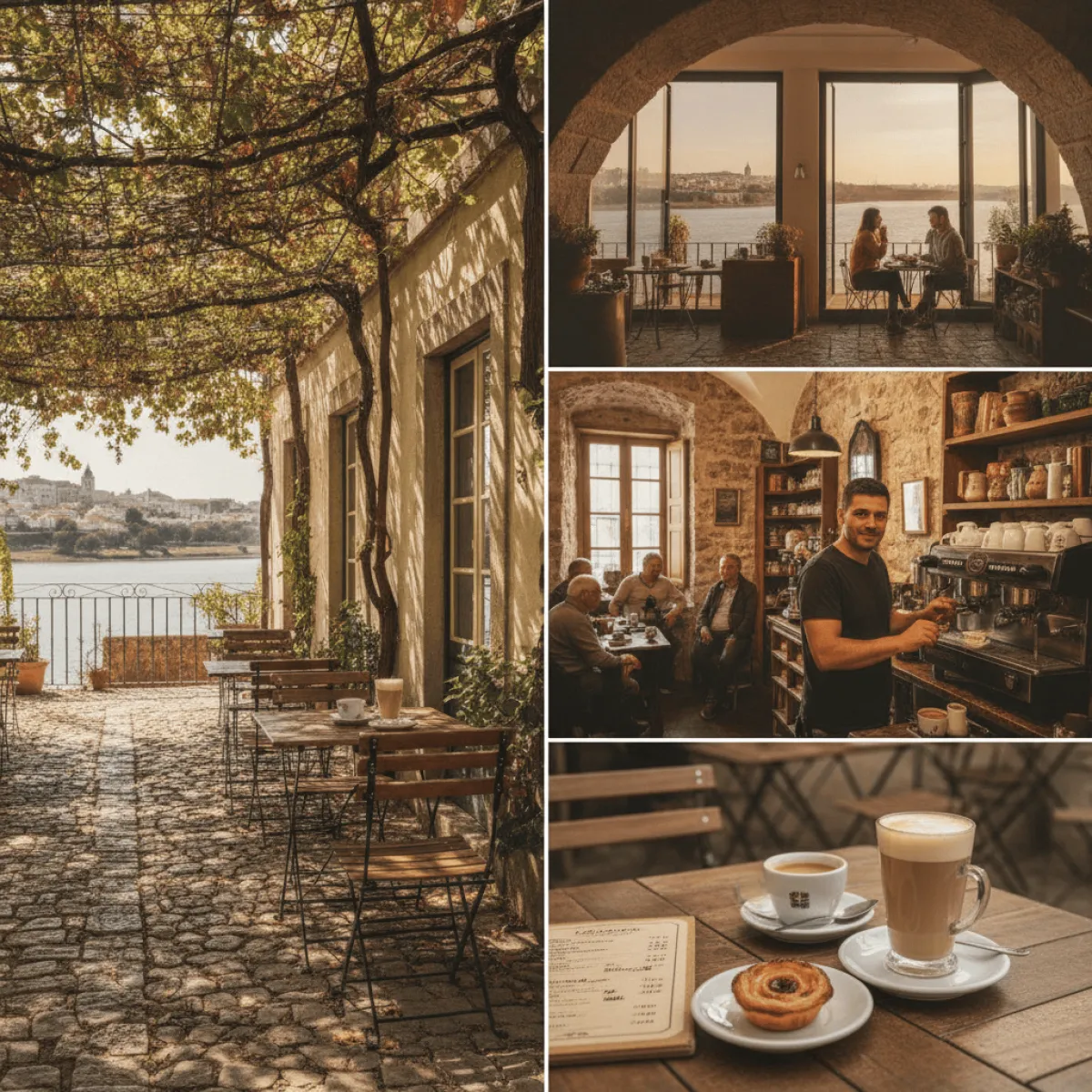
Santarém has a branding problem. It is the city everyone drives past on the way to the Alentejo or the Algarve, the one glimpsed from the motorway perched above the lezíria floodplain, and rarely the one anyone visits on purpose. That is a mistake, and the fix is coffee. Not the generic stuff from a petrol station machine, but the coffee served in three houses that, together, tell the story of a city that was once the capital of Portuguese Gothic architecture and quietly remains the home of a convent pastry tradition few outside the region know well.
The plan is simple: one morning, three stops, a walking route through the historic centre that needs no map, just an appetite.
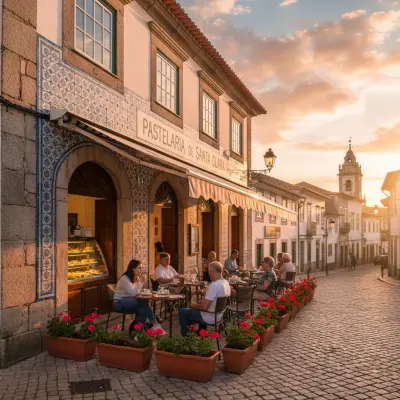
Pastelaria de Santa Clara: the slices that give the house its name
Start here. Pastelaria de Santa Clara did not pick its name at random: Fatias de Santa Clara are a convent sweet native to Santarém, made from egg yolk and sugar, dense and yellow the way only conventual pastry can be. It is the kind of thing you order with a short espresso, because the sweetness is intense enough that the coffee doesn't need to compete for attention.
There is no need to rush here. Order the slice, order the espresso, and sit near the counter watching who comes in: women picking up an order for Sunday lunch, the occasional lost tourist who stumbled onto the place by chance. That mix is what makes the pastelaria more interesting than most sweet shops with a pretty name and a generic product.
What to order
- Fatia de Santa Clara with a short espresso
- If available, ask about the house queijadas, they vary by day
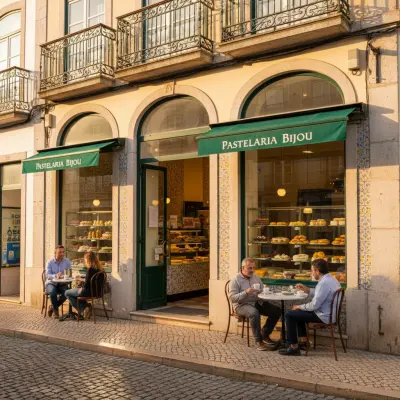
Pastelaria Bijou: the neighborhood espresso that never changes
Ten minutes on foot away, Pastelaria Bijou is the opposite of a place built for photographs. It is a neighborhood café in the most literal sense: a long counter, staff who already know half the regulars' orders, and a pastel de nata that doesn't try to reinvent anything, it just does the classic well. This is where you notice the difference between a pastry shop built for the people who live next door and one built for people passing through once.
The advice here is unoriginal but honest: order a galão and a warm pastel de nata, sit at the counter instead of a table, and listen. Santarém talks about farming, football and bullfighting in roughly equal measure, and the Bijou counter is a decent sample of that at any hour of the morning.
What to order
- Galão and a pastel de nata, ask for it warm
- Buttered toast, for anyone who wants the essentials and nothing more
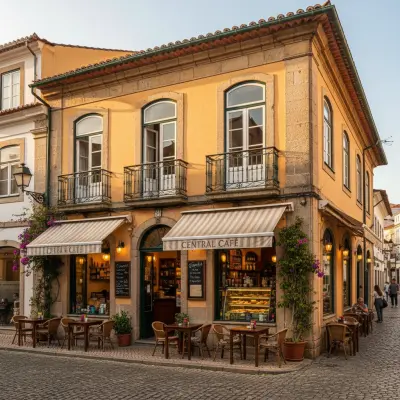
Central Café Restaurante: when morning turns into lunch
Around midday, the logic shifts, and Central Café Restaurante becomes the anchor of the route. As the name suggests, it is not just coffee: it is the kind of house that serves an espresso in the morning and a prato do dia at lunch, without ceremony. If you arrive around one o'clock, it is worth asking for the day's suggestion rather than ordering off the fixed menu, since that is usually where the freshest and cheapest food is.
It is also the right place to close the three-café route with an espresso after lunch, sitting on the terrace watching the street. Santarém is in no hurry, and after three coffees and a slice of convent pastry, neither should you be.
What to order
- Prato do dia at lunch, ask before ordering from the fixed menu
- Espresso after eating, at the counter or on the terrace
Where to sleep and how to pace the route
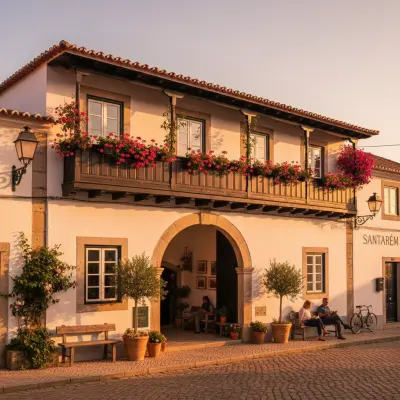
Anyone who wants to do this route slowly, without chasing the last train back to Lisbon, can stay at Santarem Hostel, a short walk from the historic centre. It is the most practical option for anyone who wants to wake up early, reach Pastelaria de Santa Clara before the Saturday queue, and still have time to climb up to the Portas do Sol viewpoint before the afternoon heat sets in.
Santarém is under an hour by train from Lisbon, which makes this route perfectly doable as a day trip. But if this article argues for anything, it is that Santarém is not a place to rush. Stay a night, take the three cafés slowly, and only then decide whether to continue on to the Alentejo.
After coffee: the city in slow motion
For anyone who wants to stretch the visit beyond pastry, Santarém has a more contemplative side that few explore. The walking meditation at Quinta Carvalhas is a good way to balance out the morning's sugar with a quiet walk through the lezíria landscape, the kind of contrast that makes sense in a city that lives between Gothic solemnity and café-counter informality.
And for those who like to stretch the trip further, some use Santarém as a starting point for more unexpected outings, like the beginner surf trip organized out of Santarém, proof that the city, despite being inland, is not as disconnected from the coast as the floodplain around it suggests.
The route, in short
Start at Pastelaria de Santa Clara for the convent slice and a short espresso. Walk to Bijou for the counter galão and the pastel de nata that never disappoints. Close the day at Central Café Restaurante, where coffee turns into lunch without warning. Sleep at Santarem Hostel if you want to do this unhurried, not with a train to catch.
Santarém doesn't apologize for being calm. It only asks for a full morning, three coffees, and the patience to listen to what the city has to say between one espresso and the next.