Grape Harvest at Cartuxa in Évora: What to Expect
At Quinta de Valbom, Cartuxa turns grape harvest into a hands-on experience: manual picking, traditional foot treading in stone lagares, and a six-wine tasting to finish. It costs €200 per person, and your feet will thank you for the wine stains.
Every year, from early September into October, Quinta de Valbom, home to Cartuxa, opens its gates for anyone who wants to understand what grape harvest actually means. It's not a wine tasting with a smooth-talking guide reciting facts about grape varieties. It's work, sweat, grapes crushed under bare feet, and, at the end, a well-earned glass in the shade. If you're planning a trip to Évora in September, this is likely the best-spent morning or afternoon you'll have in the region.
Who runs it and where it happens
The experience is run by Enoturismo Cartuxa, part of the Eugénio de Almeida Foundation, which produces the Cartuxa wines and the legendary Pêra-Manca. It takes place at Quinta de Valbom, on Estrada da Soeira, about two kilometres from Évora's historic centre, meaning it's a five-minute drive or an easy taxi ride from town. In 2026, the harvest program runs from September 2 to October 3, with two fixed sessions daily: 11am and 4pm. There are no sessions outside these hours, so confirm availability before showing up.
How the experience unfolds
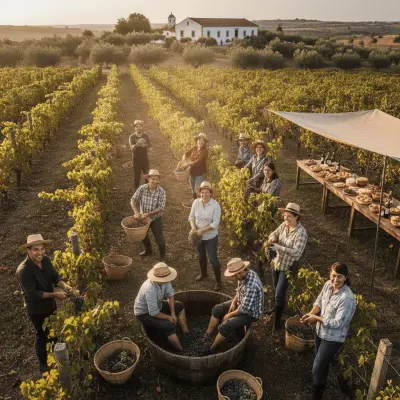
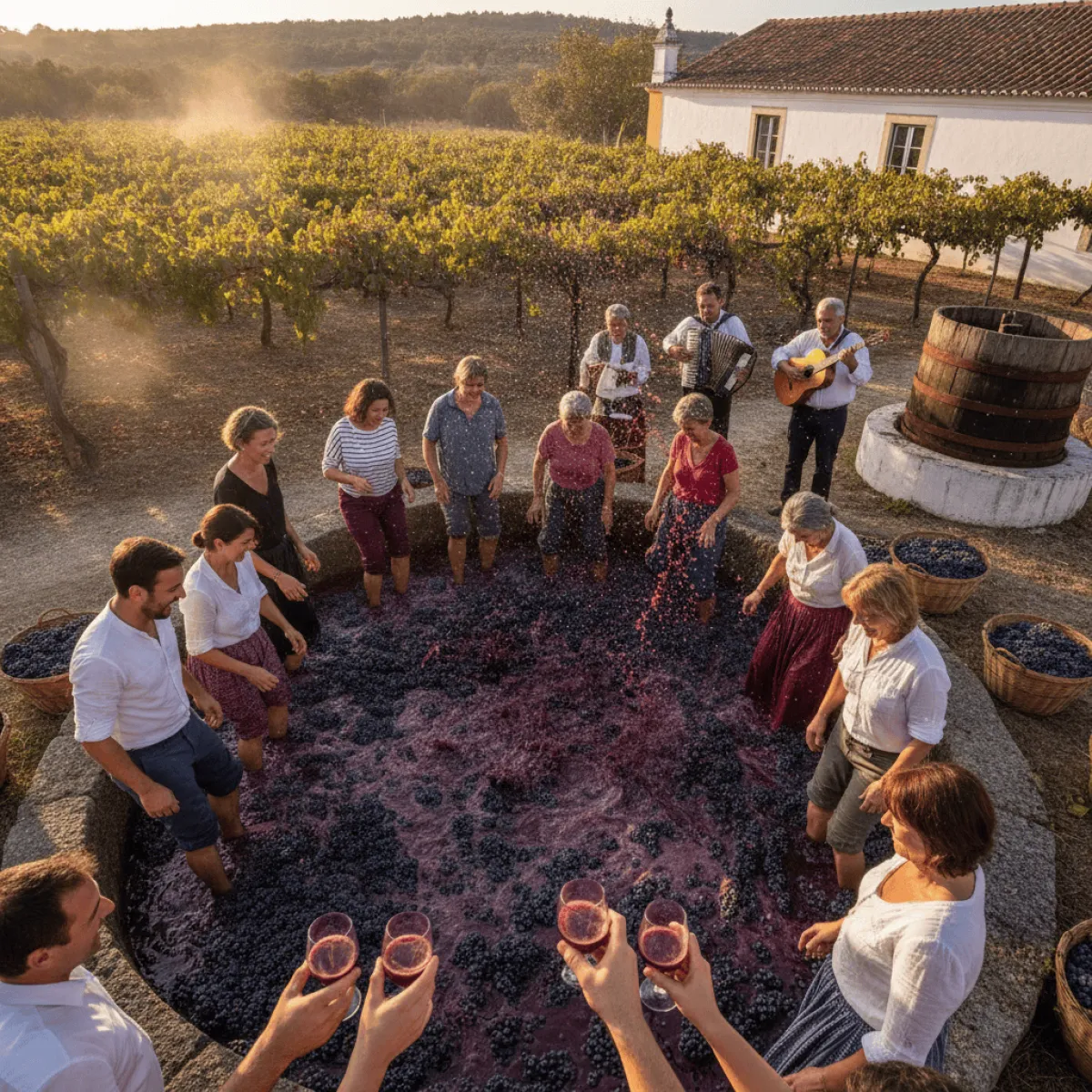
The group starts by walking through the vineyard with one of the estate's technicians, who explains how to identify the right ripeness in the grapes, typical Alentejo varieties like Aragonez and Trincadeira, and why manual harvesting still makes sense at this scale of production. Then comes the part everyone actually comes for: manual picking of the bunches, followed by traditional foot treading inside the stone lagares still used for the estate's talha wines. This isn't staged. The grapes pressed there genuinely go into the production process.
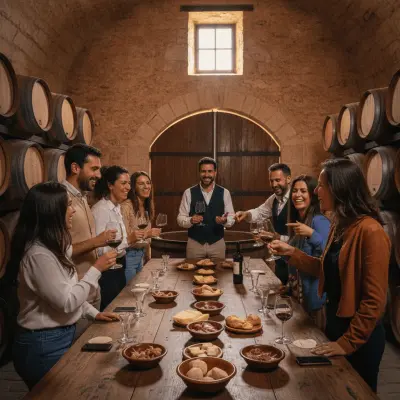
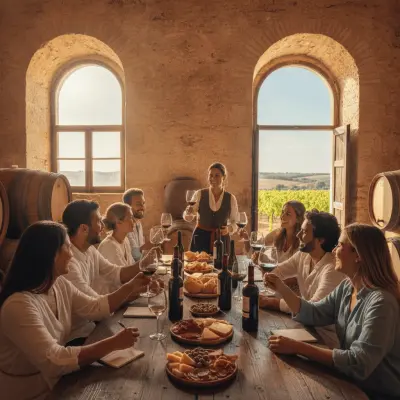
After the treading, there's a tour of the winery, where you see the difference between fermentation in talha, the ancient Roman-origin method the Alentejo has revived over the past few decades, and fermentation in stainless steel tanks. The program closes with a tasting of six wines and two olive oils from the Eugénio de Almeida Foundation, paired with regional snacks, cured meats, cheese, jams. Those who want to stretch the day further can add a paired meal at the Cartuxa Enoteca, back in central Évora, a good excuse to walk into the historic centre once the afternoon heat at the estate has passed.
The best moment
Honestly, it's the treading. It sounds like a tourist cliché, but there's something genuinely satisfying about feeling the grapes burst under your feet, the must rising up your legs, the sweet, faintly sharp smell filling the lagar. People laugh, slip, help each other stay upright. It's the moment the group stops being a bunch of tourists with cameras and becomes people working together, even if only for a few minutes.
What's less worth your attention
The technical explanation about grape varieties at the start of the vineyard walk can drag a bit if you've already done other wine tastings in the Alentejo. It's not bad, just repetitive if you've heard about Aragonez and Trincadeira a dozen times at other estates in the region. Go in with some patience, or use the moment to ask more specific questions about talha winemaking, which is where Cartuxa really sets itself apart from other producers.
Price and how to book
The program costs €200 per person without the meal, or €275 with the paired meal at the Cartuxa Enoteca included. This is clearly a premium price, higher than most grape harvest experiences in the region, reflecting both the brand's prestige and the small, exclusive group sizes. It's worth confirming directly with the operator whether pricing and conditions still hold on your travel dates, since these seasonal programs tend to shift slightly year to year. Bookings go through email, enoturismo.cartuxa@fea.pt, or by phone, +351 266 748 383. Don't show up without a reservation. Groups are limited and slots sell out weeks in advance during peak season.
Practical tips
- Wear clothes you don't mind staining. Grape must marks fabric and doesn't wash out easily from light colours.
- Open shoes, or footwear you can slip off quickly, are essential for the treading. Some operators provide sandals, but expect your feet to stay wine-coloured for the rest of the day. It's part of the fun.
- Hat and sunscreen are non-negotiable. Évora in September still has 30-degree afternoons, and the vineyard walk is entirely outdoors with no shade.
- Book at least two to three weeks ahead, especially for weekend sessions.
- Drive if you can. There's no direct public transport to Quinta de Valbom, and a taxi from central Évora is the simplest alternative.
Where to stay before or after
If you want to make this a weekend rather than just an afternoon, it's worth sleeping in Évora. M'AR De AR Aqueduto sits right by the historic aqueduct and has a pool, ideal for cooling off after an afternoon of treading grapes in the sun. For a tighter budget, Old Évora Hostel is a few minutes' walk from the centre and makes a practical base for pairing the harvest with a full day exploring the city, as we cover in this one-day Évora itinerary.
Is it worth it?
Yes, with one honest caveat: it's expensive for what it is, compared to other grape harvest programs in the region that cost half as much or less. What you're paying for here is the Cartuxa name, the quality of the final tasting, and the fact that you're treading grapes that genuinely go into the talha wine the estate sells afterward. If budget is a deciding factor, it's worth comparing with other estates in the region before booking. But if you want the most polished, well-organised version of an Alentejo grape harvest, with a tasting to match at the end, Cartuxa delivers exactly that.