Portimão After Dark: Marina Bars, Rooftop Dinners, and the Strip
By day Portimão smells like grilled fish and old canneries; by night it becomes a sequence of dinners with a view, drinks at the marina, and the Strip in Praia da Rocha until sunrise. An honest guide for going out, with detours for anyone who'd rather skip the noise.
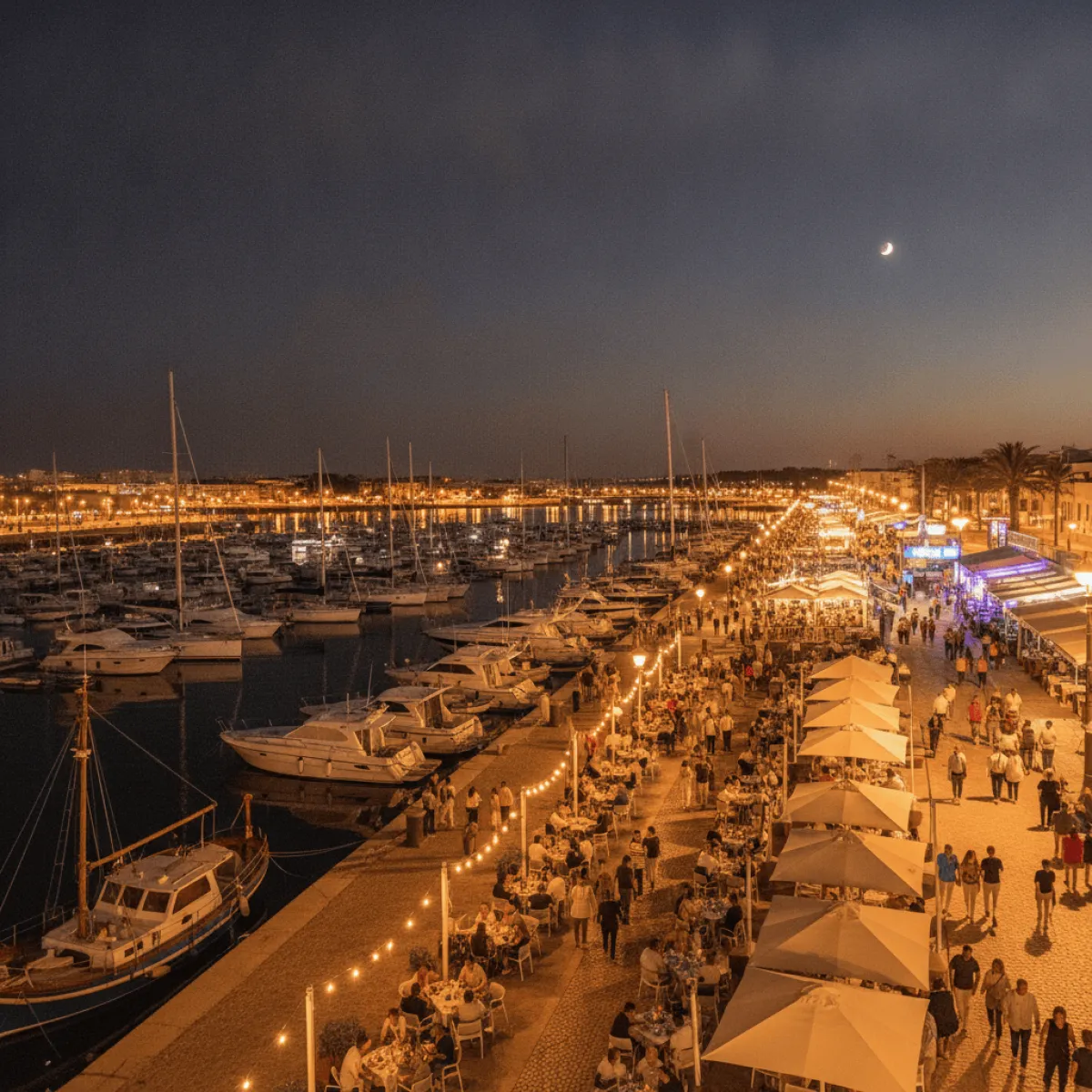
By day, Portimão smells like grilled fish and diesel from the fishing boats, and people move through it briskly, cutting between the market and the harbor as if the town still ran on the sardine canneries that made it rich in the twentieth century. By night, it changes character entirely. The marina lights come on, the restaurants along the Zona Ribeirinha fill with people deciding between grilled fish and one more glass of wine, and three kilometers away, on Praia da Rocha, Avenida Tomás Cabreira turns into a long strip of bars and clubs that don't really close until the sun is already up. This isn't Lisbon and it isn't Ibiza. It's an Algarve port town with tourist money and a nightlife that works in stages: dinner first, drinks at the marina second, and only then, if there's still energy left, the Strip.
Golden Hour Above the Water
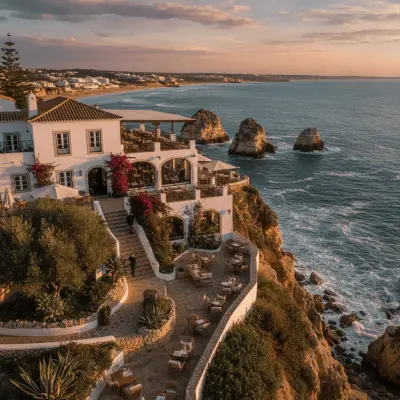
Before any night plan, there's a ritual worth respecting: sunset at Miradouro dos Três Castelos. It sits a few minutes from the center, on a promontory between town and Praia da Rocha, looking out over the mouth of the Arade river and the red cliffs that give the golden Algarve its postcard color. No ticket, no line, just a stone bench and a river turning copper. It's where locals bring visitors before deciding where to eat, and it's the best place to get your bearings for the night ahead: the marina to the left, Praia da Rocha in the distance, the whitewashed old town fading behind you.
Dinner Before the Night Gets Loud
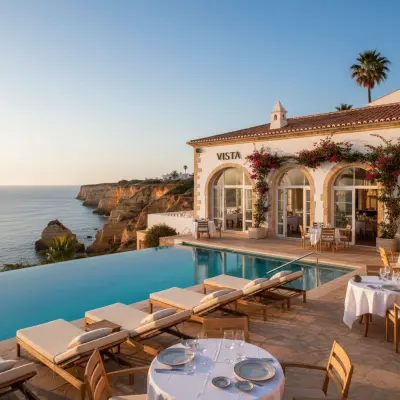
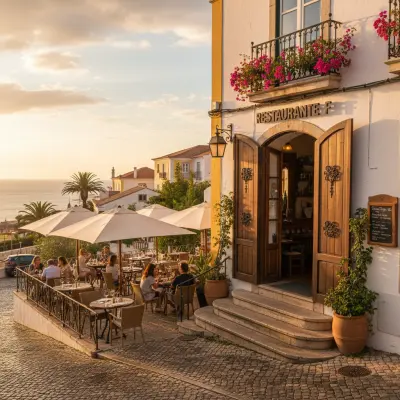
Portimão has a long tradition of grilled fish in tin-roofed tascas, and that tradition still holds up and is still worth chasing. But in recent years the town has also picked up a handful of more ambitious tables, with views and chef-driven menus, that make sense as the opening act of a night out. Vista couldn't have a more literal name: you eat looking at the sea, and it's the kind of place you book ahead in July and August, not because it's pretentious but because tables by the window are limited and everyone wants one. Restaurante F plays in the same league, with a more experimental kitchen and a wine list that tempts you to linger longer than planned, which is honestly not a bad strategy if the goal is to delay the walk to the bars. Then there's NUMA, more contemporary, louder in a good way, a dining room that already feels half like a bar before dessert even arrives. None of these is the three-euro grilled sardine spot, let's be honest about that, but they're exactly the kind of dinner that sets up a night that's going to keep going after the bill is paid.
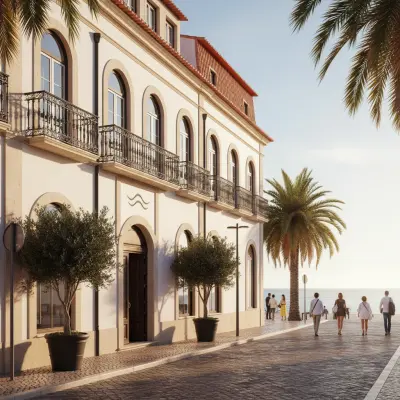
If the budget needs a break, the classic alternative is still there: the seafood grills and tascas of the Zona Ribeirinha and the old fishermen's quarter, where the catch of the day costs a fraction of the price with a fraction of the view.
The Marina After Dinner
Marina de Portimão was built for sailing tourism, and it shows: rows of yachts, a line of outdoor terraces, a casino a short walk toward Praia da Rocha. This is where the night finds its slow rhythm. The marina bars work like a communal living room: people sipping gin and tonics at white plastic tables, ambient music creeping louder as the hours pass, honeymooners mixed in with families still in flip-flops because they came straight from the beach. It's not where you go to dance until late, but it's exactly where the second drink happens, the one you nurse while deciding whether the night ends here or keeps going.
Walk to the far end of the promenade, where the Arade river meets the sea and the fishing boats still unload before dawn, a reminder of what this town lived on before tourism arrived.
Praia da Rocha: The Strip
If the marina is the aperitif, Praia da Rocha is the main course. Avenida Tomás Cabreira, pressed against the cliffs and the sand, turns after midnight into an unbroken run of bars, live music on rooftop terraces, and clubs playing everything from international pop to commercial house. It's touristy, it's loud, and it delivers exactly what it promises: an unpretentious Algarve night, cold beer, groups of friends over from the UK, Ireland, and Germany, and a permanent weekend energy even on a Tuesday in August. It's not the place for subtlety, it's the place for dancing until the sky starts to lighten over the Atlantic.
One practical tip: the walk between the marina and Praia da Rocha is long and involves stairs and inclines, not fun in heels after two drinks. A taxi or Uber takes only a few minutes and saves an argument about footwear at 1am.
Getting There and What to Expect to Spend
- By car from Faro: about an hour along the A22, the Algarve motorway.
- By bus: regular connections via Eva Transportes from Faro, Lagos, and other Algarve towns.
- Between the marina and Praia da Rocha: taxi or Uber, a few minutes, easier than walking after dark.
- Dinner with a view at the restaurants above: book ahead in summer, this isn't the budget end of town.
- A night on the Strip: entry to most bars is generally free, some clubs apply a minimum consumption, check locally.
The Morning After
After a night like that, Portimão has the decency to offer a slow-paced recovery. The e-bike ride along the Portimão coast, from Alvor Lagoon to Santa Catarina Fortress, is a surprisingly good hangover cure: wind in your face, minimal effort thanks to the battery, constant views of cliffs and dunes. For anyone who'd rather recover at the table than on a saddle, the culinary journey through the tastes of Portimão is a gentler route, built around local food instead of one more round of drinks, ideal for the day after a heavy night.
If the Noise Isn't Your Scene
Not everyone comes to the Algarve to dance until sunrise, and Portimão knows it. About half an hour by car, Silves offers a completely different pace, and the guide to Silves with kids is honest about what works and what doesn't when you're traveling with a family. Faro, further east, holds onto a quieter, less touristy cultural life, well covered in the guide to local culture in Faro. And if August in Portimão feels too crowded, even during the day, the guide on how to dodge the August crowds on the Algarve, in Aljezur, proves there's Algarve coastline without lines or music at full volume, for anyone who'd rather have the other side of the coin.
Portimão doesn't apologize for the noise it makes after midnight. This is a town that spent decades working the canneries and now works the bars, and it does both with the same practical ease of a place that knows exactly what it needs to survive the summer. Go hungry, wear shoes you can handle stairs in on the way to Praia da Rocha, and don't plan much for before noon the next day.