Douro Valley Line without a car: where to get off the train
Régua for the Douro Museum, Pinhão for its 25 tile panels and Pocinho to complete the line: a car-free rail itinerary.
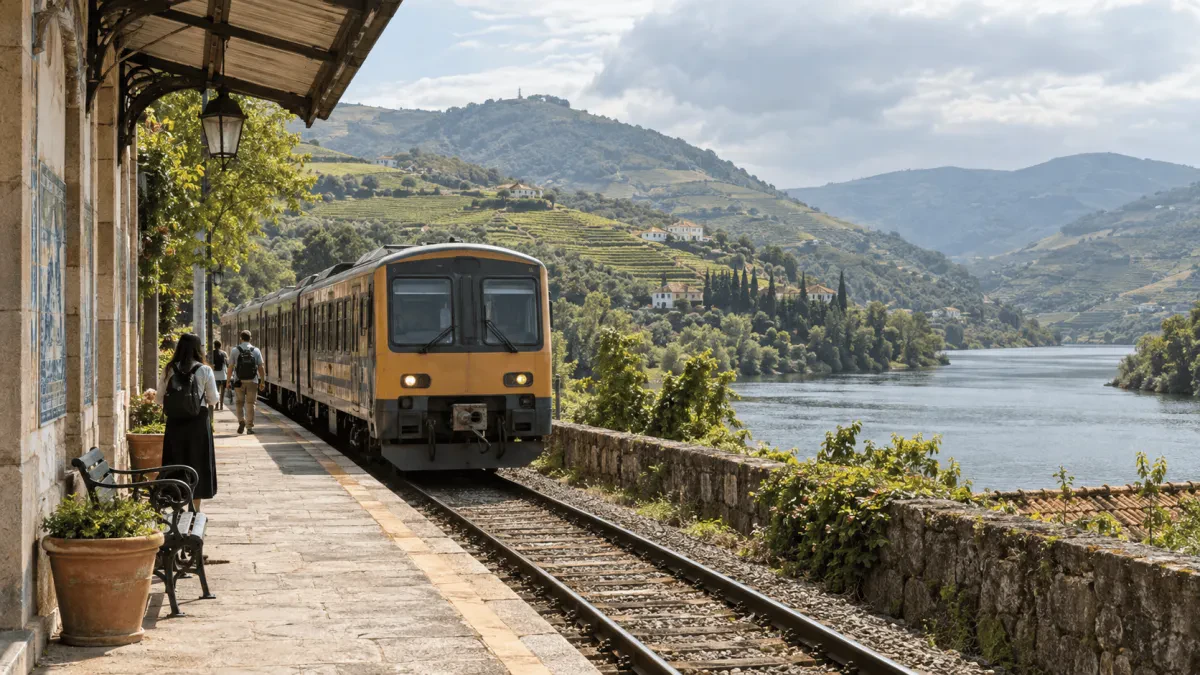
Without a car, it is not worth getting off at every station on the Douro Valley Line. The two most useful stops are Régua, to understand the region at the Douro Museum, and Pinhão, to see the station’s tiles and spend some time by the river. Pocinho works better as the end point of the rail journey than as a place for a lengthy visit.
The essential rule is simple: choose your return train first, then fill in the gap. In the timetable consulted, in force since 28 June 2026, only five trains in each direction ran along the section to Pocinho. There are more options between Porto, Régua and Pinhão, but the gaps are still long enough for a missed connection to become a problem.
The stops worth getting off for
| Stop | Why get off | Reasonable amount of time | Last departure to Porto in the timetable consulted |
|---|---|---|---|
| Régua | Douro Museum and riverside area | 3 to 5 hours | 21:19, scheduled to arrive at São Bento at 23:40 |
| Pinhão | Station, riverbank and optional boat trip | 3 to 5 hours | 20:24, scheduled to arrive at São Bento at 23:40 |
| Pocinho | Completing the line and travelling through the Upper Douro | 20 to 30 minutes on a short turnaround, or several hours between trains | 19:26, scheduled to arrive at São Bento at 23:40 |
These times are a snapshot of the service consulted on 21 September 2026, not a promise for future journeys. CP also warns that connections are only guaranteed under normal operating conditions. Always check the Douro Valley Line timetable and traffic notices on CP’s website or app on the day itself.
Régua: the stop that explains the region
Régua is the most consistent choice for anyone who wants more than watching the landscape through the window. The Douro Museum occupies Casa da Companhia and presents the permanent exhibition Douro: Matter and Spirit, as well as temporary exhibitions. It provides context for the region’s winegrowing work, landscape and economic transformation.
Allow around 90 minutes for the museum and use the rest of your stop to walk along the river. The central area makes it possible to do this without road transfers. The museum’s opening hours vary seasonally, so confirm them on the official website before travelling.
Do not automatically try to add a wine estate to the same interval. Without a car, a visit should only be included in the plan when the operator confirms a safe walking connection or transport from the station. Otherwise, you risk swapping a peaceful afternoon for a race to catch the train.
Pinhão: the best stop for combining the station and river
The station is already part of the visit. Its façades feature 25 tile panels dedicated to vineyard work and the region’s landscapes. There is no need to look for a distant monument or hire transport to justify getting off the train.
After the station, the simplest plan is to head to the Douro riverbank and leave a comfortable margin before the return journey. To add a perspective from the water, Magnífico Douro was publishing regular 50-minute and 1-hour-50-minute trips at the time of research. The shorter option fits more easily between trains. Seasonal schedules and availability should be confirmed directly with the operator.
Pinhão is also the stop where overambitious planning most easily goes wrong. The station, lunch, boat trip and a wine estate may look close together on a map, but they do not automatically make a walkable itinerary. Without confirmed transport, choose three elements and leave the fourth for another trip.
Pocinho: worth it for the journey, not a list of attractions
Going to Pocinho makes sense for anyone who wants to travel along the entire line currently operated by CP. From Pinhão, the journey continues through Tua, Ferradosa, Vargelas and Vesúvio before reaching the terminus. The reward is the railway journey and the scenery.
The timetable itself shows how to approach this stop. In the service consulted, an arrival at 10:50 allowed a return at 11:15; another arrival at 12:45 had a return departure at 13:08. These are short turnarounds, suitable for stretching your legs and getting back on the train, not for promising a complete visit. Choosing a later return means waiting several hours.
For this reason, Pocinho does not replace Régua or Pinhão. It is an addition for those who value travelling the route to the end and are happy to spend more time on board.
Two car-free itineraries that work
A balanced day: Régua and Pinhão
- Leave Porto early and get off at Régua.
- Wait for the Douro Museum to open, visit it and walk along the riverside.
- Take a midday train to Pinhão.
- See the station’s panels, have lunch and choose between a walk by the river or a short cruise.
- Return on an early-evening train, without relying on the last connection.
This is the best first trip. It trades the obsession with covering every kilometre for two stops with enough to fill the day.
A long day: Pocinho and Pinhão
For those prioritising the full line, the timetable consulted included a departure from Porto Campanhã at 7:30, arrival in Pocinho at 10:50, return at 13:08 and arrival in Pinhão at 14:07. The 18:11 departure from Pinhão arrived at São Bento at 20:25. It is a useful example of how to put the trip together, but it should be rebuilt using the timetable valid on the travel date.
This plan leaves little time for Régua and requires bringing food, water and minimal luggage. It also assumes railway punctuality. Do not book a boat trip immediately after arriving in Pinhão.
Two days: context first, full line afterwards
On the first day, visit Porto, Régua and Pinhão, staying overnight in Pinhão. On the second, travel to Pocinho in the morning, return to Pinhão and continue to Porto. Splitting the journey reduces the rush and allows you to choose a connection earlier than the last available one.
Arrange luggage storage with your accommodation in advance. The research did not find enough official information to rely on station lockers as part of the plan.
Luggage, bicycles and the connection you should not use as a backup plan
On Regional and InterRegional services, CP allows one item of hand luggage per passenger free of charge, provided it fits in the space corresponding to the seat, in the luggage rack or under the seat. The passenger is responsible for supervising and transporting their luggage. For a journey with several stops, a small backpack is a practical advantage.
There is also a dated notice that should not be generalised: between 7 September and 31 October 2026, CP announced road replacement services between Marco de Canaveses and Régua for Regional 4001, departing from São Bento at 22:25. Bicycles, wheelchairs and scooters cannot be transported on this road service. This change is temporary and does not affect the daytime plans above, but it confirms why the last train should not be used as a safety margin.
How to fit the journey into a stay in Porto
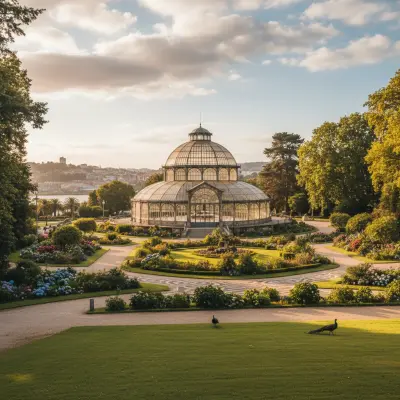
An early-morning departure may make it worthwhile to stay in the city centre the night before, for example at Gallery Hostel Porto. Do not try to fill the same day with Porto attractions: leave a walking tour of Porto’s historic centre for another day and use the Palácio de Cristal Gardens as a separate activity before or after the journey. The Douro Valley Line calls for a full day, not the leftovers of a morning.