Sé Catedral de Viseu
At the top of Adro da Sé, this cathedral mixes Romanesque, Gothic, Manueline and Baroque in a single building, with a knotted stone ceiling that makes architects travel just to see it. Entry is cheap and no reservation is needed, but check the hours before you climb up.
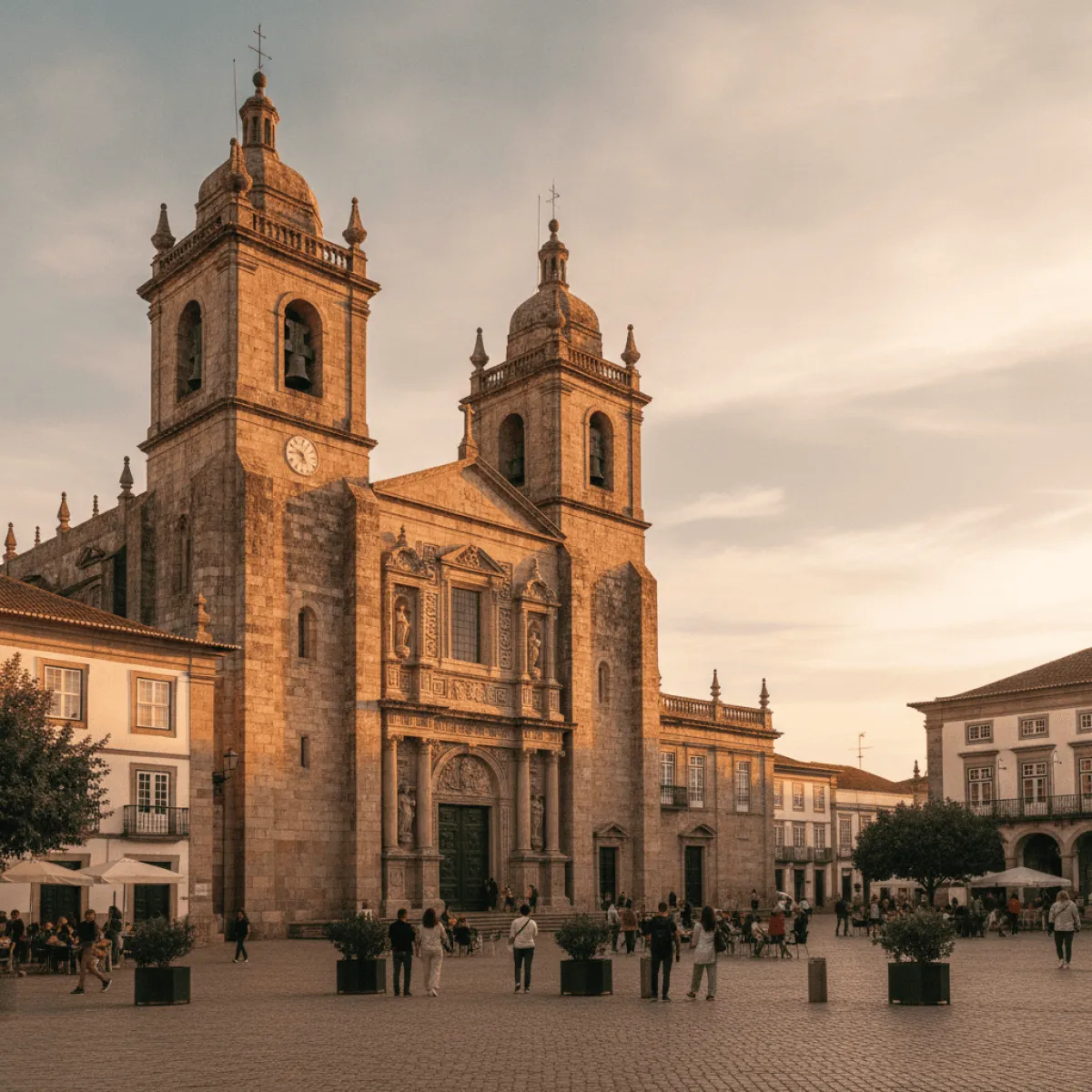
The Sé Catedral de Viseu isn't hiding anywhere. It sits right at the top of Adro da Sé, in the historic center, and its bell tower is visible from most of the city below. The address is straightforward, Adro da Sé, 3500-195 Viseu, and getting there on foot is part of the point. Walk up Rua Direita, leave the shops and cafés behind, and the last stretch of Portuguese cobblestone drops you straight at the main door.
What makes this cathedral different
Most Portuguese cathedrals settled on one architectural style and stayed there. This one didn't. You'll find Romanesque elements in the original structure, Gothic arches, Manueline details in the famous knotted ceiling, and Baroque touches on the facade and interior, the result of centuries of construction, reconstruction, and different bishops with different tastes. The vaulted ceiling of the main nave, carved with those interlocking stone knots, is the reason architects and art historians make the trip specifically to see this room. It's not just decoration, it's one of the defining examples of Manueline style in Portugal, alongside what you'll find in Belém.
The Renaissance cloister, quieter and more restrained than the church interior, offers a good counterpoint: simple columns, a central courtyard, and the sense that time moves slower in there than it does outside. Worth stepping into even if you only have ten minutes.
The neighborhood around it
The cathedral shares Adro da Sé with the Museu Grão Vasco, housed in the former Paço dos Três Escalões, which means a half-day visit covers both easily. This is the heart of Viseu's historic center, narrow streets, granite buildings, and a view over the city that justifies the climb. If you're planning the weekend, our guide Viseu Without the Traps: An Honest Weekend helps you build an itinerary without falling into tourist traps. And if you want to understand why Rossio, further down in the city, isn't actually the historic core, read Viseu: Skip Rossio, the Manueline Hides on Rua Direita, which lays out this exact route up to the cathedral.
Practical information
- Address: Adro da Sé, 3500-195 Viseu
- Price: low entry fee (€), check directly for the exact amount at the door
- Hours: not consistently available, we recommend confirming before you climb up, especially outside peak season
- Phone: +351 232 436 065
- Official website: diocesedeviseu.pt, run by the Diocese of Viseu
There's no consolidated public review score to cite here, which is normal for religious monuments managed by the diocese rather than tourism operators. That doesn't make the site any less worth seeing, it just means you won't find organized queues or timed ticketing. You show up and walk in.
Tips from people who've been
Go in the morning if you can. Light comes through the stained glass in the morning hours and hits the Manueline ceiling in a way the afternoon doesn't repeat. Bring something to cover your shoulders, this is an active place of worship, not a neutral museum space, and that's respected by most visitors. No reservation needed, no guide required, but if there's a sacristan or staff member around, ask about the cloister and the treasury room, which isn't always clearly marked.
After the visit, the obvious move is heading back down toward the commercial area for food or coffee. Café Hermínio is a solid, no-fuss stop for coffee and a pastry. If you want something more structured, Armazém do Caffè is a short walk away. And if you want to end the day on something sweet, Confeitaria Amaral remains a city reference point.
Is the climb worth it?
Yes, without hesitation. Viseu has other draws, and the city shifts pace after dark, as we cover in Viseu After Dark: A Nightlife Insider Guide, but the Sé Catedral remains the city's architectural anchor. It's not as grand as the cathedrals in Lisbon or Porto, it's more intimate, more of a mix of styles than anything else, and that's exactly what makes it worth the detour. Set aside at least forty-five minutes, more if you actually want to take in the Manueline ceiling and the cloister without rushing.
