Feast of Our Lady of Sorrows
Monte Gordo honours its patron saint with five nights of free concerts by the sea, a maritime procession with decorated fishing boats and a bay regatta. One of the most anticipated moments of the Algarve summer.
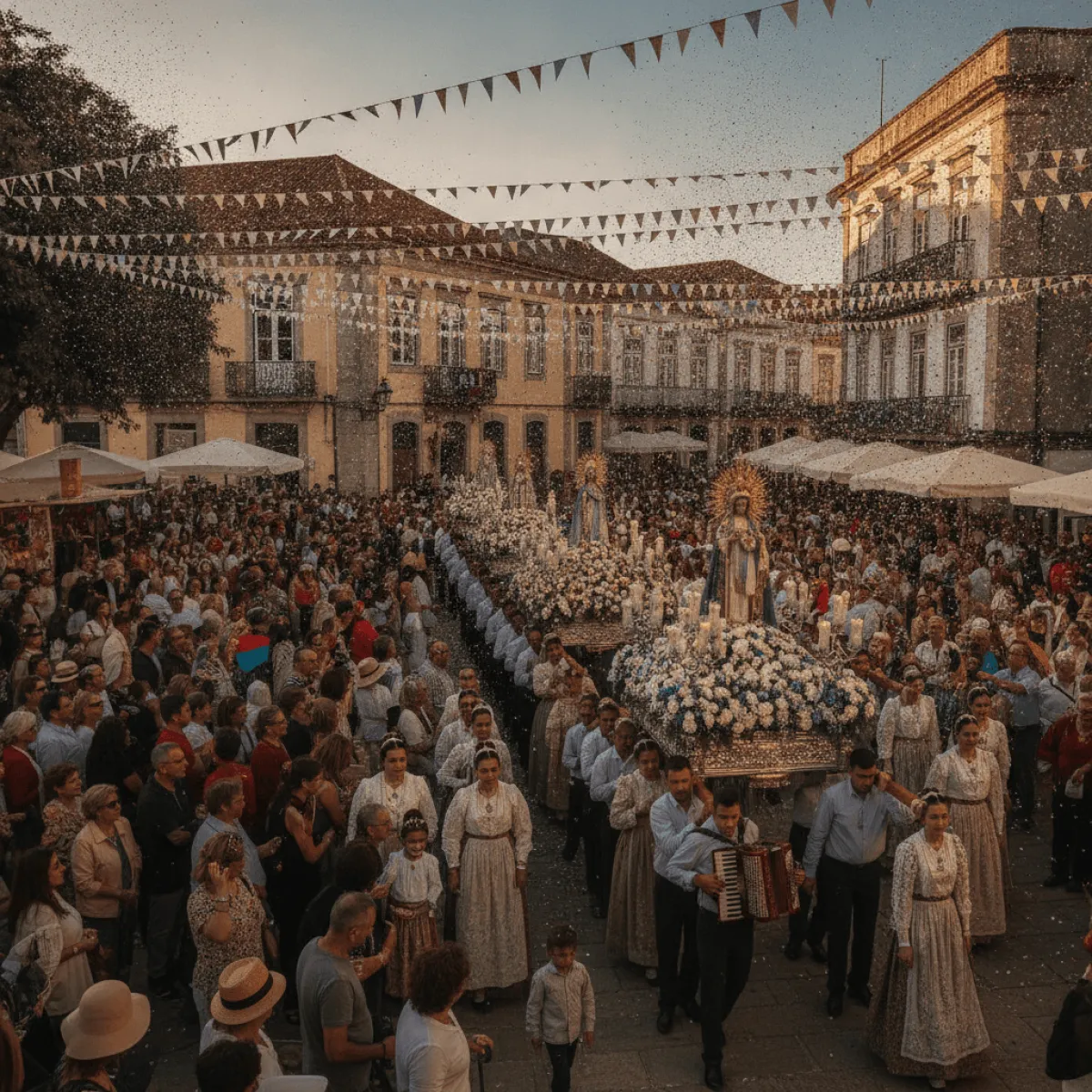
In the fishing village of Monte Gordo, part of the municipality of Vila Real de Santo António, the second weekend of September is reserved for one of the most beloved celebrations on the Algarve calendar: the Feast of Our Lady of Sorrows. In 2026, the main programme runs from September 8 to 11, with an additional religious celebration on September 15, turning the western end of Monte Gordo beach into an open-air stage for five nights.
Concerts start at 10:00 PM each night, right by the beach, blending tradition with popular entertainment. On Tuesday, September 8, Duo Reflexo takes the stage. On Wednesday, September 9, it's the turn of the Santo António de Arenilha ethnographic group and the Praia da Manta Rota folk ensemble, bringing back regional costumes and dances. On Thursday, September 10, Banda Uns & Outros provides the musical entertainment, and the festival reaches its peak on Saturday, September 11, with a concert by well-known Portuguese singer-songwriter Luís Represas.
The religious and symbolic highlight of the festivities is the maritime procession, which sets out in the late afternoon of Saturday, September 11, at 6:00 PM, along Monte Gordo beach. The image of Our Lady of Sorrows is accompanied by a fleet of decorated fishing boats, horns and fireworks over the sea, paying tribute to the village's strong fishing tradition. At noon on the same day, a regatta also takes place in Monte Gordo bay, featuring local boats. The celebrations close on September 15 with a thanksgiving Eucharist.
All concerts and events are free to attend, making this one of the most complete free programmes of the Algarve summer. For anyone visiting the region at this time of year, the combination of beach, fresh seafood, live music by the sea and genuine maritime traditions makes this feast one of the most representative moments of the cultural identity of Monte Gordo and Vila Real de Santo António.
